No Tears Allowed: The Best Games for Kids Who Get Frustrated Easily
We have all been there—the dice hit the table, the tears start welling up, and what was supposed to be a fun family night turns into a therapy session. Finding the right entertainment is crucial, which is why we have curated a list of the best games for kids who get frustrated easily. These titles focus on cooperation, low-stakes competition, and quick gameplay to keep the mood light and the fun rolling.
Understanding the Triggers
Before we dive into the specific box titles, it is important to understand what causes the meltdowns in the first place. As a gamer parent, I have learned that frustration usually stems from three specific sources: direct conflict, analysis paralysis (too many choices), and being eliminated from the game early. When a child feels targeted by a “Take That” mechanic or simply feels overwhelmed by complex rules, the fun evaporates instantly.
To avoid this, we need to look for specific mechanics that mitigate these stressors. We want games where everyone stays in the game until the end, where luck plays a bigger role than deep strategy, and where players are working together rather than against each other.
What to Avoid
When shopping for your sensitive gamer, keep an eye out for these red flags on the back of the box:
- Player Elimination: Games where you are “out” for the rest of the match if you lose are the worst for this demographic.
- Direct Conflict: If the primary way to win is stealing resources or destroying another player's pieces, proceed with caution.
- Long Setup Times: If it takes longer to explain the rules than to play the game, you have already lost the room.
“The goal of board gaming with kids isn't to train them for esports tournaments; it is to build a love for the hobby and create positive memories.”
Cooperative Classics: Winning Together
One of the most effective ways to stop frustration is to remove the opponent. In cooperative games, the players act as a team against the board. This means if the game beats you, everyone loses together, which takes the personal sting out of defeat. It encourages collaborative problem-solving rather than cutthroat competition.
Outfoxed!
This is arguably the gold standard for introducing cooperative logic to young children. In Outfoxed!, players work together to catch a fox that has stolen a pot pie. It combines simple deduction with a movement mechanism that involves revealing tokens.
The player count is flexible, working well for two to four players, making it a great option for one-on-one parent-child time or a full family game night. The replay value is surprisingly high because the suspect changes every time, keeping the deduction fresh.
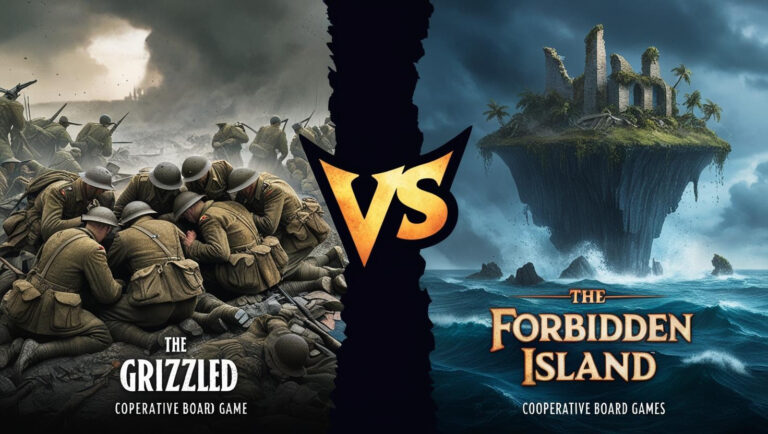
Forbidden Island
For slightly older kids who are ready for a bit more of a challenge, Forbidden Island is a fantastic choice. Players are on a sinking island and must collect four treasures and escape before the island sinks completely.
The tension rises as the water level meter goes up, but because you are strategizing together, a loss is often met with “Let's try a different tactic next time!” rather than anger. It also requires very little table space compared to sprawling strategy games, and the components are durable enough to withstand enthusiastic play.
Dexterity and Luck: Leveling the Playing Field
Sometimes, frustration comes from feeling “not smart enough” to beat a sibling or parent. That is why games based on physical skill (dexterity) or pure luck are excellent equalizers. In these games, a four-year-old has just as much chance of winning as an adult, and the rules are usually simple enough that setup time is under two minutes.
Animal Upon Animal
This is a stacking game that is equal parts hilarious and tense. Players take turns stacking wooden animals on top of one another. If your stack falls, you take the pieces back.
There is no reading required and no complex math. If the tower topples, it is usually followed by laughter rather than tears because the failure is physics-based, not personal. Regarding storage solutions, this game comes in a small, sturdy box that is easy to toss in a bag for travel. However, be warned: the wooden animals are prone to rolling under the couch if you don't have a playmat or a tray to contain the chaos.
Hey, That's My Fish!
While this game involves strategy, it is fast-paced and visually distinct. Players control penguins jumping on ice floes to catch fish. When a penguin leaves a floe, the ice is removed from the board.
What keeps this from being frustrating is that the mechanics are intuitive and the game is over in about 15 minutes. Because the turns are quick, there is no time for a child to get bored or dwell on a bad move. The changing board state creates a puzzle that resets every time you play, ensuring high replay value.
The Role of Storage and Accessories in Reducing Stress
You might not think that plastic baggies and wooden boxes affect emotional regulation, but they actually play a huge role. If you open a box and find a jumbled mess of punchboard tokens and warped cards, the pre-game mood is already chaotic. This is a hidden trigger for frustration.
Investing in proper storage solutions can make a world of difference. When a game is organized, the setup time decreases, meaning you can get to the fun part faster. For kids with short tempers, a 30-minute setup process is a recipe for disaster before the first die is even rolled.
I highly using simple plastic organizers or even small ziplock bags to separate components. This teaches kids to respect the game and provides a satisfying sense of order. Furthermore, having a designated play area with ample table space prevents pieces from being knocked over accidentally. There is nothing quite like the frustration of building a perfect card castle only to have it swiped by an elbow because the table was too crowded.
Using Playmats
Another great accessory is a neoprene playmat. Not only does it look cool, but it also defines the play area. It keeps cards from sliding around and protects the table from spills. For kids who get frustrated by components shifting, a playmat provides a stable, tactile surface that anchors the game experience.
Quick-Play Fillers for Resetting the Mood
Sometimes, despite your best efforts, a game just goes south. Maybe the dice rolls were terrible, or maybe someone just had a bad day. When this happens, you need a “palate cleanser”—a game so short and silly that it can instantly reset the mood.
Tenzi
This is less of a board game and more of a dice-rolling frenzy. Everyone gets ten dice, and you race to roll the same number on all of them. It is loud, fast, and purely based on luck.
Because a round takes less than a minute, you can play ten “games” in fifteen minutes. If you lose one round, you just start another. It is virtually impossible to stay angry while playing Tenzi. It requires zero table space—you just need a flat surface to roll the dice.
Spot It!
Based on visual recognition, Spot It! (or Dobble in some regions) is a competitive game where the playing field is completely level. Adults and kids have the exact same chance of winning because it relies on reflex speed.
The circular tin is durable and serves as excellent storage on its own. The mechanics involve matching identical symbols between cards. It is fast, frantic, and usually ends in laughter.
Frequently Asked Questions
How do I handle it when my child cries after losing?
Do not minimize their feelings. Acknowledge that losing hurts, but remind them that games are just practice for handling big emotions. You can say, “I see you are upset because you really wanted to win. It's okay to feel sad, but let's see if we can figure out a strategy for next time.” Switching to a cooperative game for the next round can also help take the pressure off.
Are cooperative games boring for adults?
Not necessarily! Modern cooperative games like Pandemic or Forbidden Desert offer deep strategic challenges that adults enjoy. However, for the very young children we are discussing, you might find games like Outfoxed! simpler. Look at it as a puzzle you are solving together; the satisfaction comes from the collective “aha!” moment.
What is the ideal player count for these games?
Most of the games listed above work best with a player count of 2 to 4. If you have a large family, look for games that can accommodate 5 or 6 players without dragging the turn length out too long, or consider playing “team vs. team” versions of these games.
Does game length matter?
Absolutely. For kids who struggle with frustration, shorter is almost always better. Aim for games that take 15-20 minutes max. If a game runs longer than 30 minutes, the cognitive load and emotional stamina required often run out, leading to crankiness.
How can I teach my child to set up the games?
Make setup part of the game! Create a ritual. If you have good storage solutions like labeled bins, the child can take ownership of “banking” the money or placing the start player token. This gives them a sense of control and purpose before the game even begins.
Finding the right games for kids who get frustrated easily is a trial-and-error process. Every child is different. Some might love the high energy of Tenzi, while others prefer the quiet focus of Outfoxed!. The key is to prioritize the relationship over the rulebook. If a game isn't working, shelf it for a year and try again. Ultimately, we want to raise gamers who love the play, regardless of the outcome.