
Best Solo Board Games: 8 Picks for One Player
I'm a dad who fell back in love with board games so I could play them with my two kids, and now I share honest, parent-first reviews of what we love. I'm not on social media, I quit it a long time ago.
The Quick Answer
Spirit Island for depth, Under Falling Skies for short sessions, Cartographers for quick plays, and Legacy of Yu for campaign play. Compare solo formats, playtime, and setup before you buy.
A solo mode is not one thing. Some games are built for one player from the ground up, some ask you to run an automated opponent, and some expect you to control two or three characters at once. Which type you buy is the difference between a game you play weekly and a box that sits on the shelf because setup takes longer than the session.
This guide sticks to eight games that each do one job well, and it names the costs and admin honestly. These are games for teens and adults, not for young kids; the published age guidance on most of them is 12 and up, and several are 14 and up. If you want board games to play with your children, our family comparisons and gift guides are the better starting point.
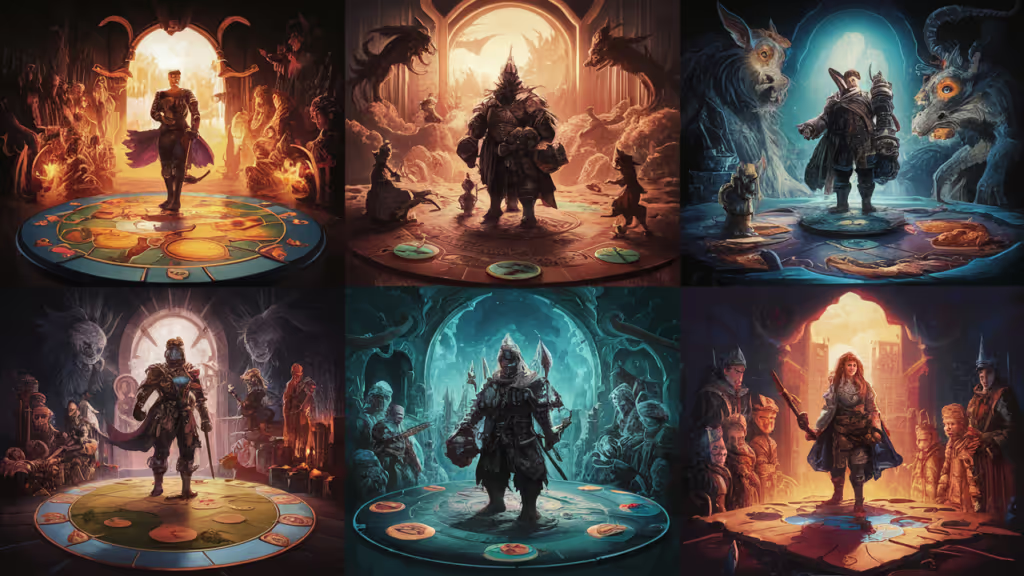
Eight solo board games that each cover a different kind of evening.
Solo Formats, Explained
Solo games come in three shapes: solo-only games with no multiplayer mode, multiplayer games that include a solo rule set, and games where you control several characters by yourself.That distinction is the one buyers get wrong most often. A campaign game that is solo-only cannot be brought out for a family game night. A multiplayer game with an official solo mode usually plays longer when you are running both sides yourself. And a game that hands you two or three characters at once is not harder, it is slower, because every turn now includes decisions for characters you also have to remember.
Two more practical notes before the list. Games that simulate an opponent (a dummy deck, an automated invader, a scenario deck) give you a real sense of competition, but they also mean more rules to hold in your head at the table. Games with a score target instead are easier to learn and easier to walk away from halfway through.
Solo Board Games Compared
| Game | Best for | Solo format | Published playtime | Learning commitment | Extra purchase required |
|---|---|---|---|---|---|
| Spirit Island | Deep, replayable puzzle | Multiplayer game with a solo rule set, one spirit | 90 to 120 min | High | None |
| Mage Knight: Ultimate Edition | Long, open-ended sessions | One Mage Knight adventuring alone | 1 hour plus, often longer | High | None |
| Gloomhaven: Jaws of the Lion | A story you play over weeks | Multiplayer campaign, solo players run two characters | 30 to 120 min per scenario | Medium to high | None |
| Under Falling Skies | Short, tense weeknight games | Solo-only | About 30 min | Medium | None |
| Cartographers | Quick games with almost no setup | Solo mode scored against the season goals | 30 to 45 min | Low | None |
| Cascadia | A calm, light evening | Solo mode scored against the wildlife goals | 30 to 45 min | Low | None |
| Final Girl | Horror movie nights | Solo-only | 20 to 60 min | Medium | Yes, a Feature Film box |
| Legacy of Yu | A resettable campaign | Solo-only | About 60 min | Medium | None |
Best Solo Board Games for Deep, Long Sessions
Spirit Island: Best Heavy Solo Game With a Real Opponent
Spirit Island is our top recommendation for deep solo play because the invaders act as a genuine opponent with their own rules, and one spirit alone is still a full, playable game.You are one spirit defending an island against colonizing invaders, and the invader phase is driven by a card-driven system rather than a human opponent’s choices. The board changes every turn: explorers spread, towns and cities get built, and blight spreads into the land you are trying to protect. As a solo player you take one spirit with its own powers and growth options, and the box is published for one to four players.
The reason it works alone is that the tension does not come from other people, it comes from the escalating invader pressure. Every spirit plays differently enough that finishing a win with one spirit makes you want to try the next. The cost is the learning curve. Spirit Island has a lot of moving parts, and running a full solo game means understanding the invader deck, the fear track, and your spirit’s growth options at the same time.
The main drawback for a beginner is time and admin. Expect 90 to 120 minutes for a session, and expect to keep a reference card beside you for the first several games. Our Spirit Island solo and cooperative guide walks through how the two modes differ.
Choose it if you want one heavy game that rewards repeated play and you do not mind reading a real rulebook. Skip it if you want something you can learn in ten minutes after work. If you prefer cooperative games you can share, our cheap cooperative picks cover lighter options.
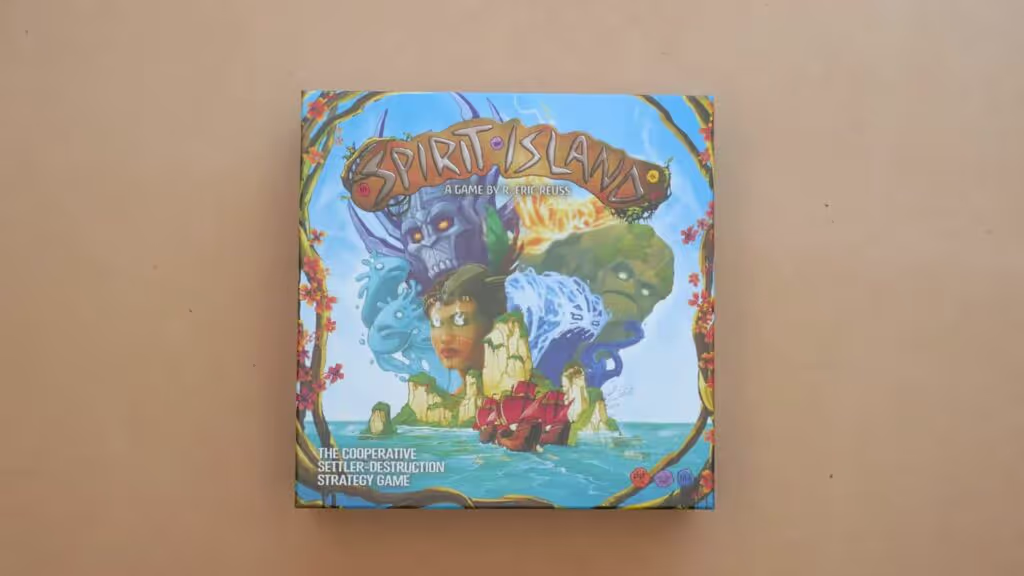
Spirit Island turns a heavy cooperative game into a serious one-player puzzle.
Mage Knight Ultimate Edition: Best Solo Sandbox for Long Evenings
Mage Knight: Ultimate Edition is the best solo board game for players who want an open map, deck-building, and a session that lasts a whole evening, because the sandbox gives you goals instead of a script.You play a single Mage Knight exploring a map that reveals as you move, recruiting units, fighting monsters, and burning through a hand of cards to power each action. There is no scripted campaign and no automated rival, just a set of objectives and the freedom to chase them badly or brilliantly.
Mage Knight’s solo reputation is deserved but it comes with real costs. Setup is long, the rules are dense, and the game expects you to internalize how movement, combat, and mana interact before it becomes enjoyable. The board also takes serious table space. Sort the tokens into baggies or a cheap organizer before your first game, because setup is the main reason people bounce off it.
Choose it if you have a full evening, a big table, and patience for a steep first teach. Skip it if you play in 30-minute windows, because you will spend more time setting up and packing away than playing. If you like the campaign structure more than the sandbox, our list of games like Gloomhaven is a useful comparison.
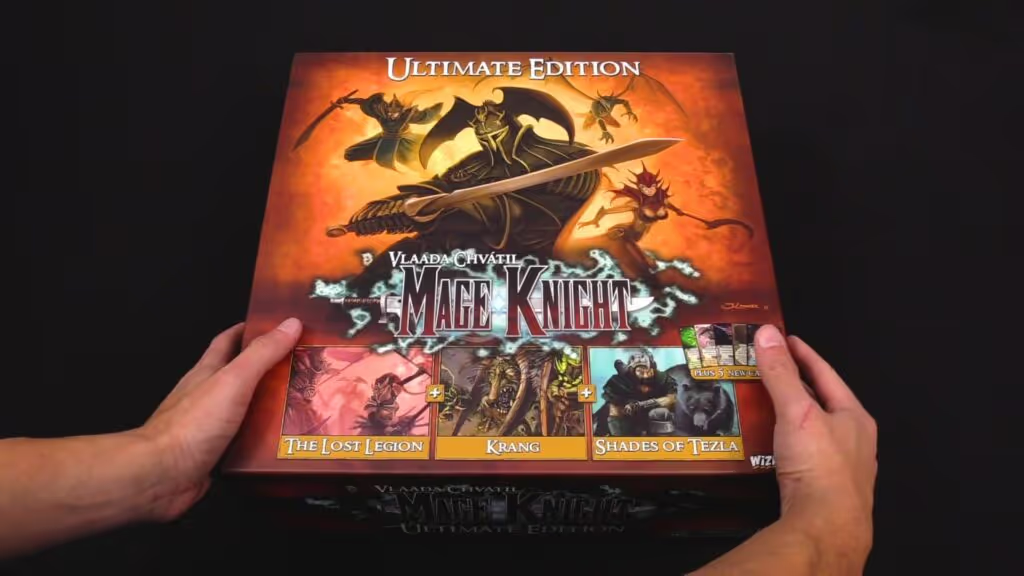
Mage Knight: Ultimate Edition rewards a full evening and a big table.
Gloomhaven: Jaws of the Lion: Best Solo Campaign Dungeon Crawler
Gloomhaven: Jaws of the Lion is the best solo campaign game for a new player because it teaches you the rules over five tutorial scenarios before asking you to run a whole campaign.It is a cooperative tactical combat campaign with 25 scenarios, and it stands alone from the bigger Gloomhaven box. On your own you play two characters and manage both decks, which is where the extra work sits: you are making every positioning and initiative decision for two mercenaries at once.
What makes it a good solo pick is the tutorial structure. The first five scenarios add rules gradually, so you learn the card-driven combat system at a reasonable pace rather than reading 50 pages that will not make sense until you play. It is also fully playable one to four players, so if your family wants in later, the box still works.
The drawback is campaign commitment. Scenarios build toward a story, and while nothing is permanently destroyed, you will want to play regularly to hold the thread. Somebody who plays once a month will likely forget the state of half the rules between sessions.
Choose it if you want a solo dungeon crawler with real progression and you are fine with a long-term commitment. Skip it if you want pick-up-and-play games. Read our full Gloomhaven campaign review before committing.
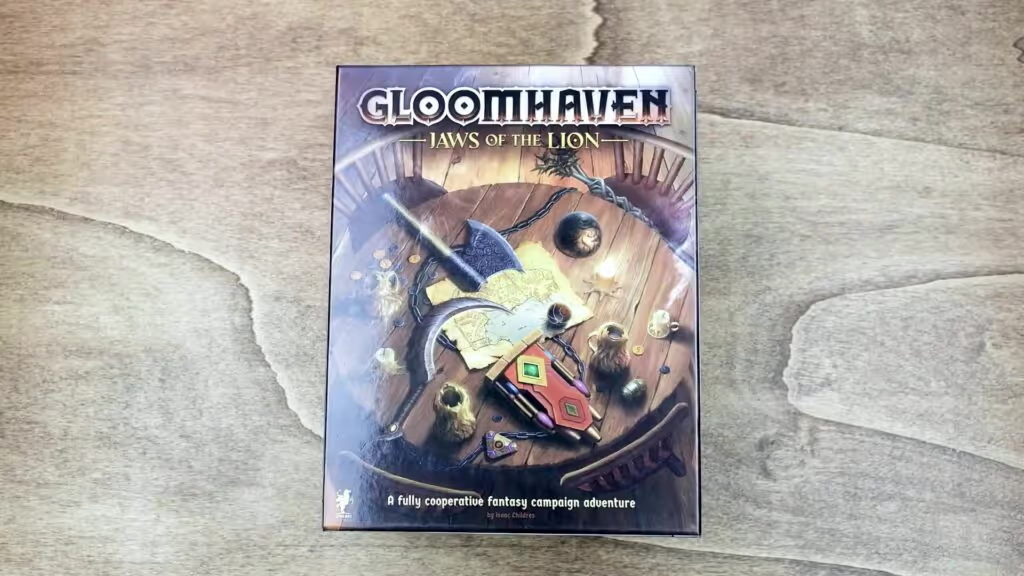
Gloomhaven: Jaws of the Lion teaches its campaign over five tutorial scenarios.
Best Solo Board Games for Short Sessions
Under Falling Skies: Best Solo-Only Game Under an Hour
Under Falling Skies is the best solo-only board game for a weeknight because a session takes about 30 minutes, setup is minimal, and the dice themselves are also the timer.You defend a city from an alien mothership, placing dice into rooms of your underground base to shoot down ships, generate energy, and advance your research. The twist is that the value on the die decides both how strong your action is and how fast the mothership descends, so a great roll is also a threat.
That push-and-pull is what makes it work as a solo game rather than a puzzle with a random draw. It is published for one player only, ages 12 and up, and it comes with a multi-mission campaign of escalating scenarios if you want a ladder rather than one-off games.
The limitation is table presence relative to session length. The base is a vertical layout with several tracks, so it wants more room than a 30-minute game suggests. It is also genuinely a solo game, so if you are looking for something you can eventually share with another player, this is not it.
Choose it if you want tension in a short sitting. Skip it if you want a game with a multiplayer mode in the same box.
Cartographers: Best Quick Solo Game With No Setup
Cartographers is the easiest solo board game to actually get to the table because the whole game is a pad of map sheets, a deck of cards, and a pencil.You draw terrain shapes onto your own map as cards are flipped, and each season scores differently: forests might score early and mountains late, so you are constantly weighing what this turn costs you later. The solo mode has you playing against the season goals rather than another cartographer.
There is almost nothing to set up, the footprint is a sheet of paper, and a game finishes in 30 to 45 minutes. Published for ages 10 and up, it is also the most approachable game on this list, which makes it a fine first solo purchase for a teenager.
The drawback is that it is light. If you want deep strategic decisions, Cartographers will feel like a warm-up rather than an evening. It is also drawing, so if you dislike the idea of drawing wonky shapes under time pressure, this is not your game.
Choose it if you want a solo game you can play on a TV tray in half an hour. Skip it if you want something with real depth. For more small, low-cost games, our guide to games under $20 with replay value has plenty of company for it.
Cascadia: Best Light Solo Game for a Relaxing Night
Cascadia is the best gentle solo board game because you spend the whole game building a habitat for wildlife and scoring against clear goals, with no opponent and no pressure.You draft habitat tiles and wildlife tokens and place them into your own ecosystem, trying to create corridors of matching terrain while satisfying scoring goals for the animals you have placed. The solo mode scores against those goals, so it is you against the objectives rather than you against an automated rival.
It is the lowest-stakes game here, published for ages 10 and up, and it plays in 30 to 45 minutes. It is also a genuine multiplayer game, so if someone wanders in wanting to play, you can add them without changing anything.
The drawback is the flip side of its charm: the decisions are gentle. If you want to be beaten by a game, this will not do it. It is also the closest thing on this list to a family game, which means an experienced solo player may outgrow it quickly.
Choose it if you want a calm game at the end of the day, or if you want a solo mode you can share later. Skip it if you want tension.
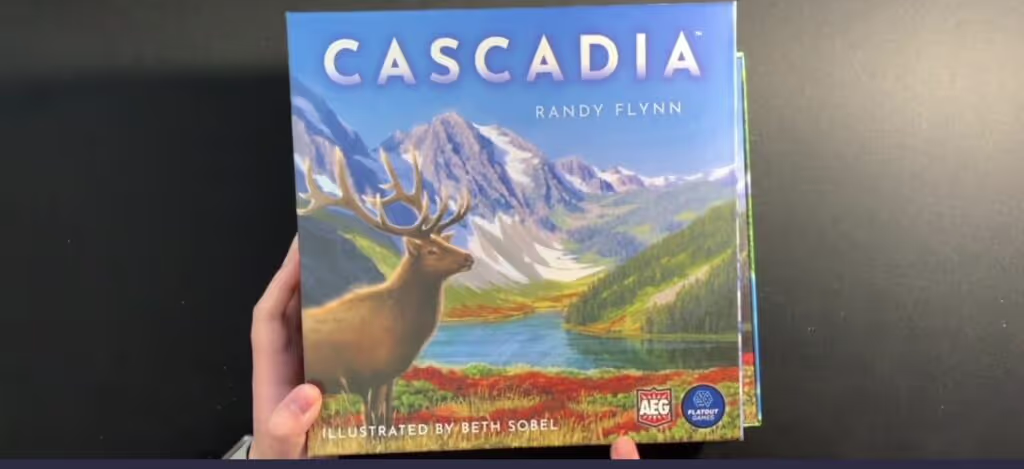
Cascadia is the lightest solo game on this list, and it plays well with others too.
Best Solo Board Games With a Story
Final Girl: Best Solo Horror Game, but Buy the Feature Film Box
Final Girl is the best solo horror board game, and the Core Box is not playable by itself: you also need at least one Feature Film box, which contains the killer, the location, and the Final Girl you actually play.The system is a modular slasher movie. The Core Box holds the rules and the shared components, and each Feature Film box adds a specific killer, location, and two Final Girls to play with. You move around the location, save victims, gather weapons, and manage the time track while the killer works through a behavior deck.
That modular structure is why the game is worth the two-box purchase. Buying one Feature Film gives you a complete, themed experience, and adding another later changes the killer and the map rather than just adding cards.
The limitation is a real one for gifting: a Core Box on its own is a paperweight. Buy the Core Box and a Feature Film together, or buy the Starter Set that bundles the two. It is also published for ages 14 and up with horror themes, so this is not a family game night pick.
Choose it if you like horror movies and replayable scenarios. Skip it if you want something you can hand to a 10-year-old. Our comparison and alternatives has other options if you are shopping for a teenager.
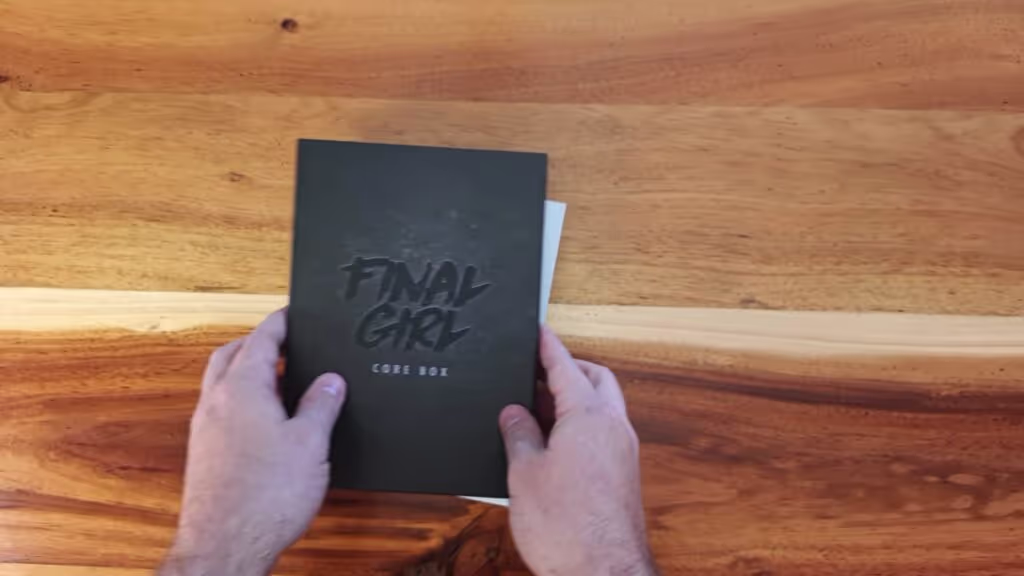
The Final Girl Core Box needs at least one Feature Film box to play.
Legacy of Yu: Best Solo-Only Campaign Game
Legacy of Yu is a solo-only, fully resettable campaign game, which means one player builds canals and defends a village across a series of linked games without permanently destroying the components.You play the legendary Yu, building canals ahead of a flood while defending your village from barbarian raids. Each game in the campaign adds new cards and rules, so the arc builds rather than resetting to the same starting position, and the campaign is nonlinear: what you do in one game affects what comes next.
Two things make it a strong solo recommendation. It is designed for one player and nothing else, so the whole design is aimed at the solo experience, and it is fully resettable, so the campaign can be played again or passed on after you finish it. It is published for ages 14 and up, with sessions of about an hour.
The drawbacks are the flip side of that focus. There is no multiplayer mode at all, so nobody can join you, and the campaign wants regular play to keep the momentum. It is also a resource-management puzzle at heart, so if you want plastic miniatures and dice, this is not it.
Choose it if you want a solo campaign with a clear finish line and a resettable box. Skip it if you want a game you can play with other people.
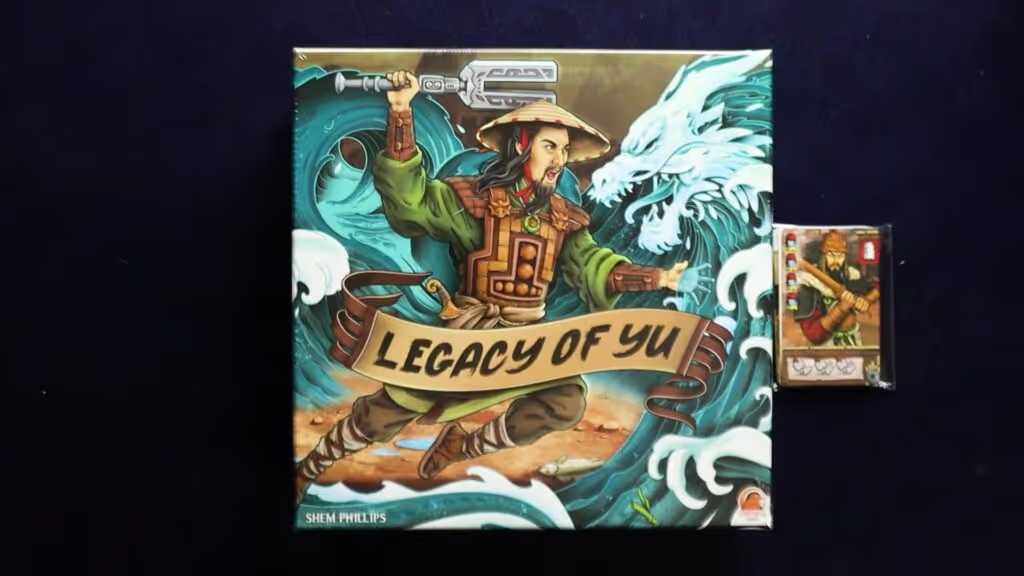
Legacy of Yu is solo only, but the campaign is fully resettable.
How To Choose a Solo Board Game
Decide three things before you buy: whether you want short sessions or a campaign, whether you want to run one character or several, and how much setup you will tolerate on a weeknight.Short sessions or a campaign. Under Falling Skies, Cartographers, and Cascadia are session games you can play tonight and forget about tomorrow. Gloomhaven: Jaws of the Lion and Legacy of Yu are commitments that pay off over weeks. Mage Knight sits in between, with standalone scenarios you can leave on the table.
One character or several. Under Falling Skies, Final Girl, Legacy of Yu, and Cascadia put you in charge of a single position. Gloomhaven: Jaws of the Lion expects you to run two characters, and some Spirit Island players control two spirits at higher difficulty. More characters means more bookkeeping, not more difficulty.
Administration you can live with. Automated opponents take extra rules to remember. Spirit Island and Final Girl both simulate pressure on the game’s side, and both reward you with tension that a score target cannot provide. If you want to switch your brain off, play Cartographers or Cascadia instead.
Setup and storage. Mage Knight and Spirit Island are the two games here where a baggie habit or a cheap organiser measurably changes whether you get them to the table. Both also need real table space. Cartographers needs a pencil and a sheet of paper.
Where to start cheaply. If this is your first solo game, the smallest purchase is Friday, a solo-only deck builder from Friedemann Friese that comes in a small box for around $20 and teaches the rhythm of solo play in about 25 minutes. Our round-up of small box games under $20 covers that category if you want more options at that price.
Check the age rating. These are teen and adult games. Spirit Island, Under Falling Skies, and Cartographers are published at 10 to 13 and up, while Mage Knight, Gloomhaven: Jaws of the Lion, Final Girl, and Legacy of Yu are 14 and up. Nothing on this list is designed for a 7-year-old, even if your family plays the multiplayer versions together.
Solo Gaming Questions
Do I need a special edition to play these games solo?
No. Spirit Island, Mage Knight, Gloomhaven: Jaws of the Lion, Cartographers, and Cascadia all include an official solo mode in the standard box. Three titles on this list are solo-only by design: Under Falling Skies, Final Girl, and Legacy of Yu. Only Final Girl requires a second purchase, and that is a Feature Film box rather than an expansion.
Do I need more than the Final Girl Core Box for solo play?
Yes. The Final Girl Core Box is not playable on its own. It contains the rules and shared components, and you must own at least one Feature Film box, which supplies the killer, location, and Final Girl. A Starter Set bundles a Core Box with a Feature Film if you want a single purchase.
Is Legacy of Yu solo only, or can you play it with other people?
No. Legacy of Yu is a solo-only game designed for one player, with no multiplayer mode in the box. It is a nonlinear campaign with sessions of about an hour, and the campaign is fully resettable so you can replay it or pass it on.
Which solo board game is easiest to learn?
Cartographers is the easiest entry point, followed by Cascadia and Under Falling Skies. All three are playable within 20 minutes of opening the box. Mage Knight and Spirit Island are the two heaviest games here and both need an evening of rules reading before your first real session.
Are these solo games suitable for children?
Not at the ages on this list. Publisher age guidance runs from 10 and up (Cascadia, Cartographers) to 14 and up (Mage Knight, Gloomhaven: Jaws of the Lion, Final Girl, Legacy of Yu), and the heavier titles involve rule overhead that most kids will not enjoy alone. Our family play happens with the multiplayer versions of these games; the solo modes are for older teens and adults.
Editorial Standards
We never accept payment for positive reviews. Affiliate links support our work at no cost to you. All games are tested with our family before review.