
Azul Board Game Expansions | Which One to Buy First
I'm a dad who fell back in love with board games so I could play them with my two kids, and now I share honest, parent-first reviews of what we love. I'm not on social media, I quit it a long time ago.
The Quick Answer
Azul board game expansions explained: Summer Pavilion is the best family buy, Crystal Mosaic upgrades your base game, and Glazed Pavilion tops Summer Pavilion.
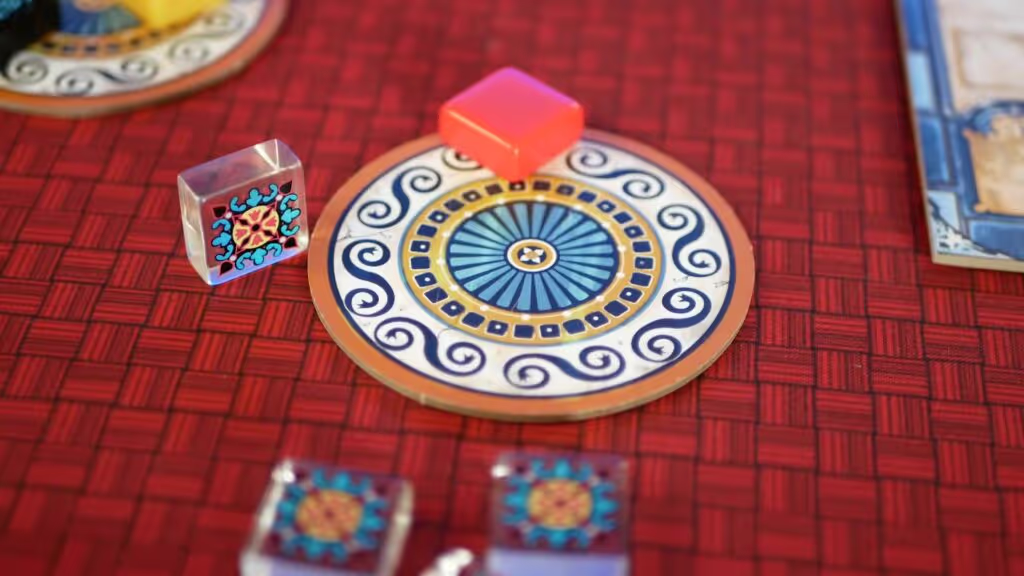
Azul players draft tiles from factory displays and place them on their personal board.
Summer Pavilion is the best standalone Azul follow up for most families. It keeps the familiar tile drafting, adds wild tiles and bonus spaces, and replaces the harsh floor line with a bank of up to four tiles. If you already own Azul and want the most useful add on, Crystal Mosaic is the better choice because it secures your tiles and adds fresh player boards. Do not buy Crystal Mosaic or Glazed Pavilion as your first Azul game because they need another box.
Here is the important category correction: most Azul releases are standalone games, not expansions. Stained Glass of Sintra, Summer Pavilion, Queen’s Garden, Master Chocolatier, Azul Mini, and 5211: Azul can be played without the original Azul. Crystal Mosaic requires base Azul. Glazed Pavilion requires Summer Pavilion.
Which Azul Game Should You Buy First?
Buy Summer Pavilion for a family game night, Crystal Mosaic for an existing Azul collection, and Stained Glass of Sintra for a more demanding puzzle.| If you want | Buy this | Why it fits |
|---|---|---|
| The best family follow up | Azul: Summer Pavilion | Standalone, gentler penalties, and engaging for mixed ages |
| A different puzzle for experienced players | Azul: Stained Glass of Sintra | Standalone, restrictive placement, and a discard tower that creates tension |
| A deeper optimization game | Azul: Queen’s Garden | Standalone, hexagonal tiles, and a demanding scoring puzzle |
| A physical upgrade to base Azul | Azul: Crystal Mosaic | Expansion for base Azul with overlays and new player boards |
| A new physical setup for Summer Pavilion | Azul: Summer Pavilion Glazed Pavilion | Expansion for Summer Pavilion, not a standalone game |
| A smaller travel box | Azul Mini | Standalone compact edition with the base game rules |
Azul Expansions and Standalone Games Explained
The Azul series contains two true add on expansions, Crystal Mosaic and Glazed Pavilion, while the other main releases are standalone games or editions.The word expansion is used loosely in shops and search results, so the box you are buying may not work that way. Use the category and compatibility column below before you order.
| Game or edition | Category | Base game needed? | Players | Playtime | What changes |
|---|---|---|---|---|---|
| Azul | Base game | No | 2 to 4 | 30 to 45 minutes | The original wall building game |
| Azul: Stained Glass of Sintra | Standalone game | No | 2 to 4 | 30 to 45 minutes | New window placement and discard tower |
| Azul: Summer Pavilion | Standalone game | No | 2 to 4 | 30 to 45 minutes | Wild tiles, bonus spaces, and tile banking |
| Azul: Crystal Mosaic | Expansion | Yes, base Azul | 2 to 4 | 30 to 45 minutes | Overlays and double sided player boards |
| Azul: Summer Pavilion Glazed Pavilion | Expansion | Yes, Summer Pavilion | 2 to 4 | 30 to 45 minutes | Overlays, player boards, and scoring board |
| Azul: Queen’s Garden | Standalone game | No | 2 to 4 | 45 to 60 minutes | Hexagonal tiles and garden scoring |
| Azul: Master Chocolatier | Collector edition | No | 2 to 4 | 30 to 45 minutes | Chocolate themed version of the base game |
| Azul Mini | Compact edition | No | 2 to 4 | 30 to 45 minutes | Smaller components for travel |
| 5211: Azul | Standalone card game | No | 2 to 5 | 20 to 30 minutes | Majority color card play, not tile drafting |
If you have not played the original yet, the Azul rules explained guide is the right place to start. The guide covers the base drafting and wall placement rules before you compare the siblings.
Why Azul Summer Pavilion Works for Families
Summer Pavilion is the easiest Azul follow up for a family because it keeps tile drafting but gives players a gentler way to handle leftover tiles.Summer Pavilion has six rounds, a changing wild color, and a tile bank that lets you keep up to four tiles between rounds. Bonus spaces add points for completing special features, and the final scoring is based on the garden display. The result is less brinkmanship than base Azul, but there are still meaningful choices about when to take a large group of tiles.
In our house, Alex at 7 can draft independently, Emma at 10 plans ahead, and my wife and I still enjoy the sharper decisions. It is the box I reach for when we want the Azul rhythm without a floor line debate.
Why Crystal Mosaic Is the Best Upgrade for Base Azul Owners
Crystal Mosaic is worth buying when base Azul already has regular table time because it improves the physical setup without adding a new ruleset.Crystal Mosaic is an expansion, not a standalone game. It includes plastic overlays that help keep tiles in place and double sided player boards that change the layout of each game. The rules remain those of base Azul, so the value is cleaner physical play and fresh planning rather than a new mechanic.
I would buy it before another standalone box for a family that already loves the original. If Azul has barely left the shelf, or you already use a board insert, save your money for Summer Pavilion instead.
Is Stained Glass of Sintra a Good Azul Expansion?
Stained Glass of Sintra is a standalone 2 to 4 player puzzle, not an expansion, and it is more restrictive than base Azul.Stained Glass of Sintra replaces the square wall with windows made from transparent panes. A placement token limits the windows you can work on, while the tower holds discarded panes and turns waste into a visible penalty. It is a good choice for adults or older children who want a more demanding drafting game.
Emma called it the hard Azul after one play, which is an accurate description. It does not combine with Summer Pavilion or base Azul, so treat it as its own game rather than an add on.
Is Queen’s Garden Too Difficult for Families?
Queen’s Garden is a standalone 2 to 4 player game and the heaviest main Azul purchase for players who enjoy planning and optimization.Queen’s Garden uses hexagonal tiles and a scoring system built around completing garden features. It has more ways to lose points than the gentler Summer Pavilion, so it asks for a longer concentration span. I keep it for adult game nights when the table wants a thoughtful puzzle rather than a quick family round.
The rules are approachable, but the decision space is the reason to buy it. Do not choose it simply because it has the most advanced-looking rules. Choose it if your group enjoys spatial optimization and will use a 45 to 60 minute game.
What Are Glazed Pavilion, Azul Mini, and 5211: Azul?
Glazed Pavilion is a Summer Pavilion expansion, Azul Mini is a compact standalone edition, and 5211: Azul is a separate card game.Glazed Pavilion belongs beside Summer Pavilion. It adds new boards, overlays, and scoring components, but it cannot start a game on its own. Azul Mini is a smaller standalone version of the base game for travel and smaller tables. The player count remains 2 to 4.
5211: Azul is the odd one out. It is a 2 to 5 player card game about selecting the most played color, and it runs in roughly 20 to 30 minutes. Buy it for card play, not for tile drafting. Master Chocolatier is also not a new standalone system. It is a chocolate themed collector edition of the base game.
The Dad’s Pick and Buying Order
Our family buying order is Summer Pavilion first, Crystal Mosaic second for base Azul owners, and then Stained Glass of Sintra or Queen’s Garden for players wanting more challenge.Start with base Azul if your family has not played it. From there, I would buy Summer Pavilion first because it gives the best family follow up. Add Crystal Mosaic only if base Azul is already a regular player. Choose Stained Glass of Sintra for a more restrictive puzzle, or Queen’s Garden when the table wants deeper optimization.
Azul Mini and Glazed Pavilion are situational purchases. Mini earns its place in a travel bag, while Glazed Pavilion earns its place only after Summer Pavilion has become a favorite.
If you want to improve your base game decisions before buying more, try the seven Azul strategies. For a different tile pattern game, see board games like Azulejos.
Frequently Asked Questions About Azul Expansions
Which Azul game is best for a family?
Azul: Summer Pavilion is the best Azul follow up for most families because it keeps the familiar drafting and placement rhythm while giving players a gentler tile bank and bonus spaces.Do I need the original Azul to play the expansions?
You only need the original Azul for Crystal Mosaic. Glazed Pavilion needs Summer Pavilion, while Stained Glass of Sintra, Summer Pavilion, Queen’s Garden, Master Chocolatier, and Azul Mini are standalone games.Is Azul Mini an expansion?
No, Azul Mini is a compact standalone edition of base Azul. It plays for 2 to 4 players in a smaller box and does not require the original game.Which Azul game is the most strategic?
Queen’s Garden is the most demanding main release for players who enjoy optimization. It uses hexagonal tiles and a more complex scoring system, so experienced players get more from it than a relaxed family table.Can I mix Azul games together?
No, the standalone Azul games are not designed to be combined. Crystal Mosaic is the add on for base Azul, and Glazed Pavilion is the add on for Summer Pavilion.Is Master Chocolatier a different game?
Master Chocolatier is a chocolate themed collector edition of base Azul with the same 2 to 4 player structure. It is not a combination of the other Azul releases.Editorial Standards
We never accept payment for positive reviews. Affiliate links support our work at no cost to you. All games are tested with our family before review.