
Sushi Go! Strategy | Win More at Family Game Night
I'm a dad who fell back in love with board games so I could play them with my two kids, and now I share honest, parent-first reviews of what we love. I'm not on social media, I quit it a long time ago.
The Quick Answer
Sushi Go strategy that helps you choose cards, build sets, manage wasabi, maki, pudding, and chopsticks by player count and round.
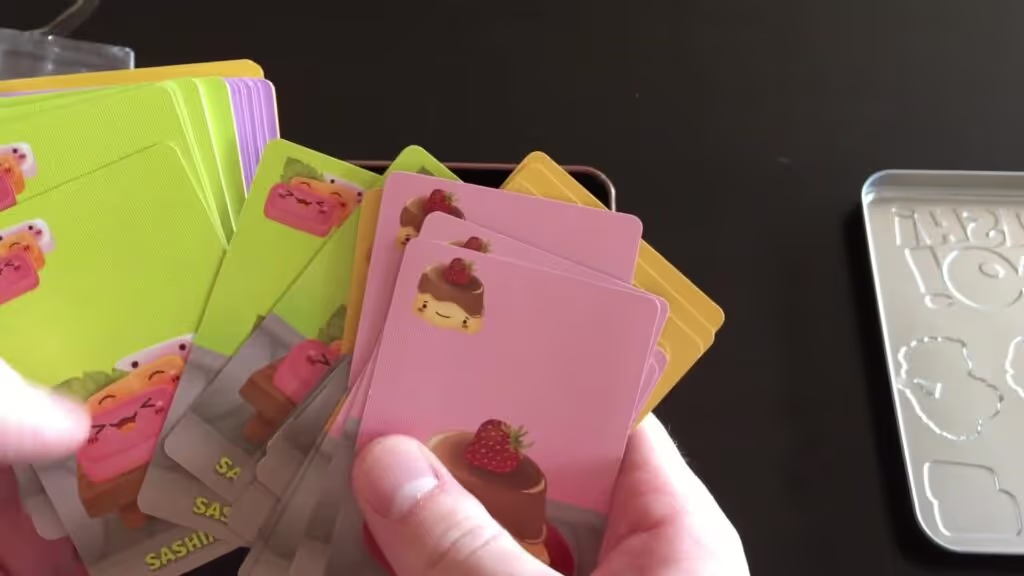
Players holding colorful Sushi Go! cards featuring different desserts
I teach Sushi Go by asking one question: what does this card help me finish? A squid is excellent with wasabi, but a squid without a plan can be a distraction. Two tempura cards may be better than one high value card that leaves you with nothing at the end.
We play this at floor level with Alex and Emma. Emma counts what has already passed. Alex remembers who took the pudding. I am still learning not to chase maki when my hand says no.
Best Sushi Go Strategy for the First Turn
The first turn is about options, not a predetermined opening.
- Take a card that starts a set you can complete.
- Take squid if you already have wasabi or can protect the pairing.
- Take a second tempura or sashimi when the first is already in hand.
- Take maki only when your hand gives you a realistic path to first.
- Take a cheap nigiri when you need reliable points or need to stop someone else from taking a better card.
The best opening is the card that gives you a useful second and third choice. A hand full of isolated high point cards often scores less than a smaller hand with a live combination.
If you are new to the game, our Sushi Go how to play guide covers the setup and scoring rules before you worry about advanced drafting.
Sushi Go Card by Card Strategy
| Card | Scoring rule | Sushi Go strategy |
|---|---|---|
| Squid nigiri | 3 points, or 9 on wasabi | Take with wasabi or when it completes a needed set. |
| Salmon nigiri | 2 points, or 6 on wasabi | Reliable points and a backup wasabi target. |
| Egg nigiri | 1 point, or 3 on wasabi | Useful filler or a cheap way to block a better card. |
| Wasabi | Triples the next nigiri played on it | Take when you have a realistic path to a nigiri, not automatically. |
| Maki | 6 for most icons, 3 for second | Chase only when the hand supports first place. Ties split first place. |
| Tempura | 5 for each pair | Take a second card when you can. A single tempura scores zero. |
| Sashimi | 10 for each set of three | A second sashimi needs a realistic path to the third. |
| Dumplings | 1, 3, 6, 10, then 15 at 5 or more | Take enough to climb the scale, not one lonely dumpling. |
| Pudding | Most pudding scores 6, fewest loses 6 in 3 or more players | Count early. In 2 players, take them because there is no penalty. |
| Chopsticks | Take the top 2 cards, then return it | Use it when the extra cards improve your plan. One per turn. |
The deck contains 5 squid, 10 salmon, 5 egg, and 6 wasabi cards. The scarcity of squid makes wasabi valuable, but it does not make every wasabi automatic.
Strategy by Round in Sushi Go
Early Rounds
Choose cards that make your next turn easier. Start a pair of tempura, collect a second sashimi, or protect a wasabi and squid pairing. Avoid taking a card solely because it looks impressive if it leaves the rest of your hand disconnected.
Middle Rounds
This is where denial becomes useful. If an opponent has one sashimi, take the next one when you can. If someone is building maki, decide whether taking their icon improves your own race or simply wastes a turn. Count the cards that have passed, not just the cards in your hand.
Final Rounds
Pudding, unfinished sets, and available maki decide the score. A wasabi without a usable nigiri is worth nothing. A single tempura or two sashimi cards are worth nothing. Take the card that scores now only when your hand has no better path.
Wasabi and Squid Strategy
Wasabi is a multiplier, not a free point. Squid on wasabi is the best famous pairing at 9 points, but salmon gives 6 and egg gives 3. The right question is whether you can protect the pairing until a useful nigiri arrives.
Do not take wasabi automatically if it means passing a card that completes a set. Holding two wasabi cards is not a rule violation either. It is a choice about how many future multipliers you can still use.
Maki Strategy and the Tie Trap
Maki is exciting because one card can swing six points. It is also easy to chase too early. Count the icons, watch what opponents are collecting, and stop if another player has a cleaner path to the most icons.
A tie for most maki splits the six points. There is no automatic second place payout when two players tie for first. If you cannot win the maki race, take cards that build your own score instead.
Pudding Strategy and the Sushi Go Endgame
Pudding is scored at the end. The player with the most pudding scores 6, while the player with the fewest loses 6 in a three or more player game. A tied last place can still hurt you, so one early pudding is useful insurance.
In a two player game, the fewest pudding penalty does not apply. The player with more pudding still scores 6, so take puddings when the card is useful and do not treat them like a six point trap.
How Strategy Changes by Player Count
- Two players: Start with 10 cards each. You see revealed cards, not the opponent’s current face down choice. Count squid, wasabi, and pudding, and use the larger hand to set up combinations.
- Three players: Start with 9 cards each. There is enough information to punish an obvious sashimi or maki plan, but not so much that every card is predictable.
- Four players: Start with 8 cards each. Denial and set completion matter because the hand gets tighter as the deck moves.
- Five players: Start with 7 cards each. Take practical points, protect a live set, and do not spend the whole game on a maki race you cannot win.
The same card changes value with the table. A card that gives you options in a two player game may be a denial play at five players.
How to Deny Cards Without Chasing Every Match
Watch what players keep, not only what they pass. If someone has one sashimi, the next sashimi has extra value. If someone has three maki, the fourth may not be worth taking unless you are close to the lead.
Denial works best when it protects a real plan. Do not take a card just to stop someone else when the card damages your own score.
Teaching Sushi Go Strategy to Kids
Alex learned the counting habit at a two player table. He does not need to memorize every card yet. He needs to ask whether a card completes a set, blocks an obvious plan, or does nothing useful.
Emma sees the longer pattern. She notices when I keep taking wasabi without securing a nigiri, and she reminds me that the card is not worth anything by itself. That is how the strategy becomes understandable rather than magical.
For more family setup advice, see how to teach Sushi Go to kids. The Sushi Go teaching tool guide explains the counting and probability side.
Sushi Go Party Strategy
Sushi Go Party has different menus, more cards, and support for larger groups. Do not apply the original five player hand sizes or base game card counts to Party. Use the same principle: read the current hand, protect a scoring plan, and use denial when it helps.
If the deck is tired, our games like Sushi Go list has alternatives based on drafting, set collection, and family play. The Sushi Go review covers what is in the original box.
Sushi Go Strategy FAQ
What is the best opening strategy in Sushi Go?
Take the card that gives you the best second and third choice. Build a pair, protect a wasabi and nigiri pairing, or take a card that blocks an obvious plan. There is no universal first pick.Should I take wasabi without a nigiri?
Sometimes. Wasabi can be worth taking if you have a realistic path to a nigiri and the alternative is a weak card. Do not take it automatically, and do not treat two wasabi cards as an automatic mistake.When should I take maki in Sushi Go?
Take maki when your hand and the icons already in front of you give you a realistic path to the most maki. If you are behind, cards that build your own score may be better.How does Chopsticks work in Sushi Go?
Take the top two cards from the draw pile, then return Chopsticks to your hand. You can use only one Chopsticks card per turn, and the cards you take should improve your plan.Does Sushi Go strategy change with player count?
Yes. Two player hands are larger and reveal more information. Three, four, and five player hands are smaller, so set completion, denial, and practical points become more important.Editorial Standards
We never accept payment for positive reviews. Affiliate links support our work at no cost to you. All games are tested with our family before review.