
How to Play Quest for El Dorado Solo | Official Rules and Fan Variants
I'm a dad who fell back in love with board games so I could play them with my two kids, and now I share honest, parent-first reviews of what we love. I'm not on social media, I quit it a long time ago.
The Quick Answer
Learn how to play Quest for El Dorado solo. Separate official Ravensburger rules from fan variants, then choose a solo setup that fits your table.
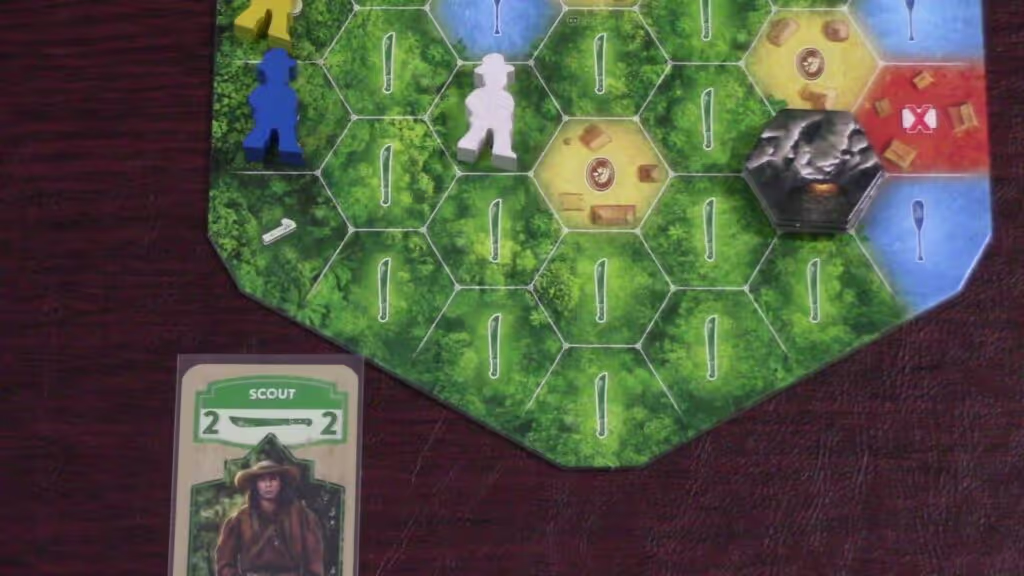
Planning a route through the jungle in The Quest for El Dorado.
I am Spector, a dad to Alex, 7, and Emma, 10, and I enjoy the clean decisions in this game. I also know how annoying it is to open a guide, follow a setup, and later discover that it described a fan made rule as if it came from the publisher. This guide keeps those two things separate.
If you want the complete competitive rules first, read our Quest for El Dorado setup and strategy guide. For a different way to play with more than one person, see the cooperative variant guide.
What You Need to Know Before Solo Setup
The short answer is that you do not need a rival deck. You need the base game and a chosen variant or house setup. The official rulebook covers competitive play for 2 to 4 players, the three phase turn, the market board, movement, buying, caves, and final round tie breakers. It does not define a solo opponent.
This distinction matters because the original article claimed that the base game includes a solo mode. That claim was not supported by the English Ravensburger rulebook. The exact source used for this rewrite is the searchable copy of the publisher rulebook at BoardGameBot’s official rulebook mirror. Ravensburger also has an official game instructions page.
Official Quest for El Dorado Rules at a Glance
| Rules point | What the publisher rulebook says | Solo relevance |
|---|---|---|
| The Quest for El Dorado | The base game is for 2 to 4 players, age 10 and up. | There is no official solo mode. |
| Quest for El Dorado solo variants | The publisher rulebook does not supply a rival deck or automa procedure. | Treat these as community files, not official rules. |
| The Quest for El Dorado caves variant | Caves are an optional official variant with 36 cave tokens shuffled during setup. | Caves can support a solo adaptation, but they are not an opponent. |
| The Quest for El Dorado base market | The market starts with six card piles. Empty stacks expose the next stack, and a vacant market space can open access to remaining cards. | Build the normal market. There is no market refresh row. |
Correct Base Game Setup
Use this setup when you are learning the game or testing a house solo rule.
- Assemble the terrain tiles, terrain strips, and ending tile. Place the ending tile at the far end of the route.
- Place the six market card piles on the market board. Keep the stacks together. Do not make a refresh row.
- Give the solo player 4 Travelers, 3 Explorers, and 1 Sailor. That is the standard eight card starting deck.
- Shuffle the starting deck. Draw a four card opening hand and place the adventurer on a numbered starting space.
- Put the blockades, cave tokens if you are using the official caves variant, action cards, expedition board, draw pile, and discard pile where everyone can reach them.
- Keep the normal turn structure: play cards, discard played cards, and draw back to four cards.
The market purchase rule is also worth getting right. You may buy up to one card per turn. Coin cards pay their printed value, while other cards pay half a coin each. A purchased card goes directly to the discard pile and cannot be used that turn. When a stack is empty, the next stack becomes available. If there is a vacant market space, you may buy from the remaining cards and move an outside stack into that space.
How the Fan Made Solo Options Work
Three Automa Variant
The clearest community option I found is the BoardGameGeek file titled Solo variant. Its description says that you play against three automa. The automa do not play cards. During their turns they can trash market cards, interact with blockades and caves, and race toward the finish by the shortest line.
That means the automa are a rules layer over the base game, not a fixed deck hidden in the box. Use the linked PDF and its stated setup. Do not substitute the rival deck and market refresh rules from the old version of this page.
Flooding River Variant
Another community result is the Solo, Co op, and Competitive Variant. Its search description says the river starts by discarding blockades, advances each turn, and uses caves to help players or hinder the river. The solo goal is reaching El Dorado without losing pawns.
This is a separate variant document. It is not a page from the Ravensburger base rulebook, and the exact river timing and cave effects should come from the variant file rather than an invented summary.
Two Explorer Challenge
Another community discussion describes a solo challenge in which one person controls two explorers and must bring both to El Dorado against automated explorers. This is not the normal two player rule. In the official two player mode, each human player has two pieces and must reach El Dorado with both.
If you choose this route, call it a house challenge or community variant from the beginning. It is suitable for experimenting, but it should not be marketed as the official solo mode.
A Simple House Setup for Your First Solo Game
If you do not want to download a community file, use the base game as a personal route challenge. This is my approach when I want a quiet game without pretending there is an official automa.
- Set up the base game for one player with the normal eight card deck, four card hand, terrain, and six market stacks.
- Give yourself one adventurer and play the normal movement, action, buying, and draw phases.
- Use the official caves variant if you want more decisions. Follow its setup and cave timing from the rulebook.
- Set a personal target before starting, such as reaching El Dorado in 12 turns. This is a challenge goal, not a publisher rule.
- If the game feels too open, limit yourself to one market purchase per turn as usual and avoid making up extra movement powers.
- If you want pressure, add a visible timer or a fixed turn target. Neither is an official rule.
Alex once asked why the same box had a different solo setup in an online guide. We checked the rulebook together and found the answer quickly: one page was describing a community file, while another called it base game. That conversation is why this guide labels the source before it labels the strategy.
Solo Strategy Without a Rival Deck
The useful challenge is deck building, not a fake opponent. Buy movement that matches spaces you can reach now, keep some removal options for base camps, and avoid filling the deck with cards that cannot help the route.
- Watch the route, not just the market. A cheap card that unlocks the next two spaces is usually more useful than a card that sits in hand.
- Keep a balance of green, blue, and yellow movement cards when the route demands it.
- Remember that a purchased card is not immediately playable. It goes through the discard pile first.
- Use the official caves rules only when you have followed their setup and timing.
- Treat a community automa file as a complete rule set. Do not combine its rival procedure with another fan variant unless the authors say that is allowed.
Spector’s Verdict on Solo El Dorado
For a different quiet night puzzle, my family also enjoyed the Blokus solo guide. It is a different kind of challenge, with no opponent or story to manage.
Quest for El Dorado Solo FAQ
Can you play Quest for El Dorado by yourself?
Yes, as a personal challenge or with a community solo variant, but the base game is officially for 2 to 4 players and does not include a rival expedition deck.Is there an official solo mode in Quest for El Dorado?
No. The Ravensburger English rulebook covers competitive play for 2 to 4 players. Its optional caves variant is official, but it is not a solo opponent or a separate solo mode.What is the correct market setup for Quest for El Dorado?
Prepare the six expedition card piles on the market board. When a stack empties, the next stack becomes available, and a vacant market space can open access to remaining cards. There is no market refresh row.What is the difference between a fan solo variant and a house rule?
A fan solo variant is a community document with its own automa, river, or other procedure. A house rule is a change you make yourself. Neither should be described as an official base game rule unless the publisher rulebook says so.Can I use the caves variant for solo play?
Yes, as a personal adaptation. Follow the official caves setup and card effects, then add a clearly stated solo challenge or use one community solo document consistently.What should I use instead of a rival deck?
Use the normal base game setup with one player, or follow the exact rival procedure in a named community variant. Do not invent a fixed rival deck or assume the market refreshes each round.Editorial Standards
We never accept payment for positive reviews. Affiliate links support our work at no cost to you. All games are tested with our family before review.